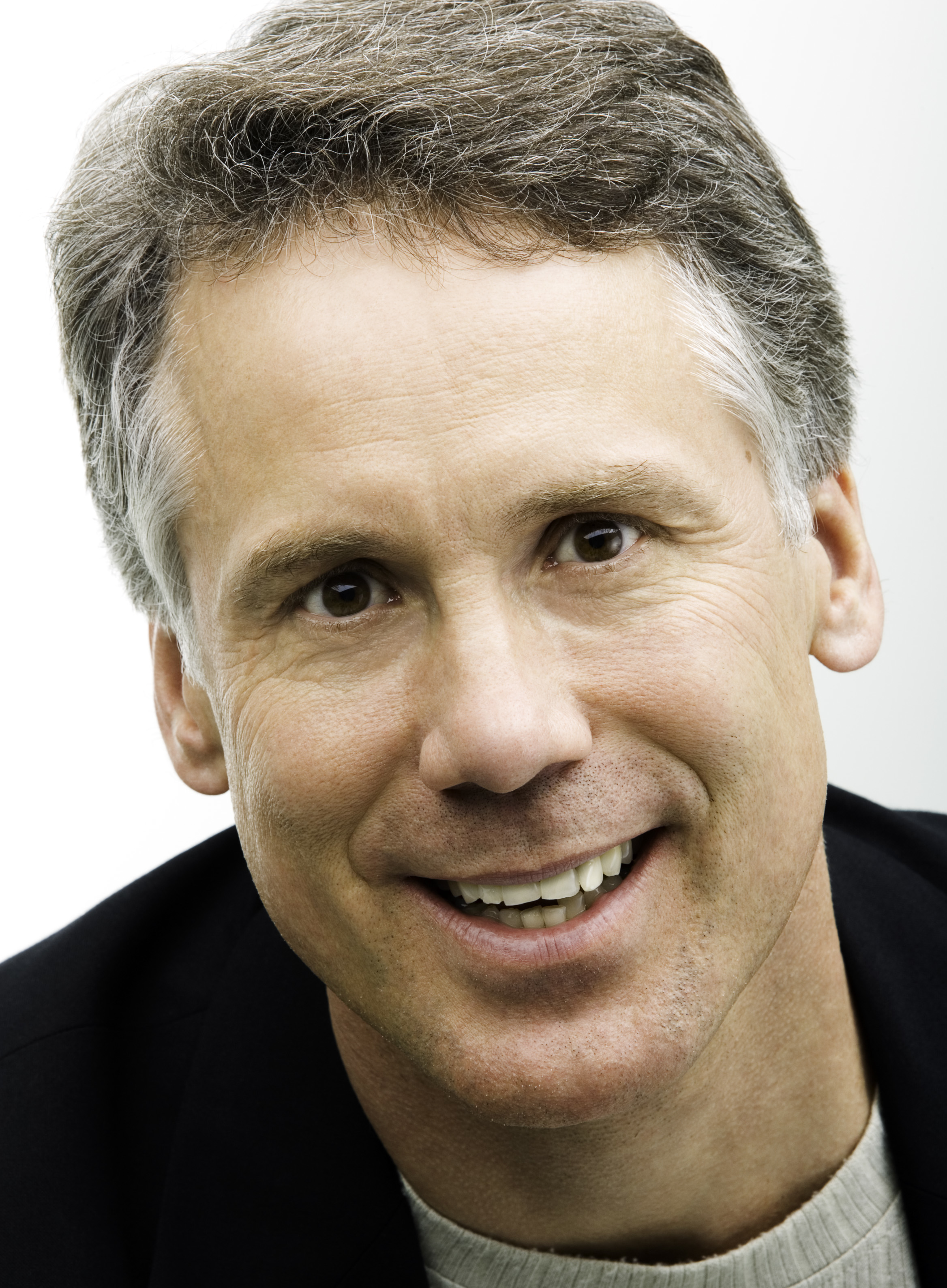
 On Sunday, March 27, Michael Dowd joined me for a powerful, deep, searing public conversation we titled “The New Ten Commandments and the Coming Apocaloptimism.”
Michael Dowd is an evolutionary theologian, bestselling author, and evangelist for Big History and an honorable relationship to the future. What I appreciate about Michael is that he combines the most commonsense virtues associated with religion — heartfelt access to tears, gratitude, wonder, inspiration, grief, and moral care (to the point of organizing his whole life around service to the future) — with those of science— rationality, skepticism and rigorous grounding in an evidence-based orientation to reality.
In recent years, I’ve especially appreciated his courage — the fierce courage to face the most discouraging facts about our human “overshoot” of our planet’s carrying capacity, as well as the humble courage to question and evolve his own beliefs and assumptions.
As regular listeners to this series are aware, I have long been fundamentally optimistic, but also mindful of our powerful tendencies toward denial of what’s most disturbing. So I’ve recently been holding conversations that dare to “walk on the dark side.” Peter Russell and I asked “supposing it’s too late, what then?” Stephen Jenkinson and I examined our death phobia and grief illiteracy.
Growth is like an ever-deepening spiral, and facing realities we fear to face is essential to real integrity. Michael is a dear brother. He and his wife, Connie, have pointed me to many important ideas that have helped evolve my evolutionary consciousness, and I have no doubt they will continue to do so.
As we began or dialogue, I asked Michael to articulate what he sees as the New Ten Commandments or “what the voice of Reality is telling us through evidence.” Michael regards Reality as God. They cannot be separated. Our current understanding of Reality, including environment and ecology, did not exist three thousand years ago. Climate was seen as a divine blessing or judgment.
What are the limits (the “Grace” limits) we must observe in order to thrive in the future? Michael has shared this with dozens of other religious, spiritual and ecological leaders, who have helped him refine this language, so the New Ten Commandments reflects their collective intelligence.
These Ten Commandments express the Grace Limits of our time:
- Stop thinking of Me as anything less than the voice of undeniable and inescapable Reality.
- Stop thinking of ‘divine revelation’ and ‘God’s word’ apart from evidence.
- Stop thinking of Genesis, or your creation story, apart from Big History.
- Stop thinking of theology apart from ecology.
- Stop defining and measuring ‘progress’ in short-term, human-centered ways.
- Stop allowing the free or subsidized polluting of the commons.
- Stop using renewable resources faster than they can be replenished.
- Stop using non-renewable resources in ways that harm or rob future generations.
- Stop exploring for coal, oil, and natural gas — keep most of it in the ground!
- Stop prioritizing the wants of the wealthy over the needs of the poor.
I responded by pointing to the obvious: Humanity is violating all of these Grace Limits right now! We’re caught in the act. How do we relate to that sobering and humbling reality?
Michael says that this requires us to encounter the language of religious condemnation: if we don’t live in right relationship to Primary Reality or God’s Nature, we are inevitably on a path to self-destruction.
We have overshot our use of the planet, and we will have to face a future of less. There are consequences to living outside out of right reality. As Robert Louis Stevenson said, we are “sitting down to the banquet of consequences.” No miracle or shift of consciousness will change this.
Asked about the term “apocaloptimism” Michael explained, “I am a short-term pessimist and long-term optimist.” He thinks we are facing a great crash but that humanity will survive, and that we’ll find a way to live within the bottom line of a mutually enhancing relationship to the earth.
But that “crash” will potentially involve failing crops, a shrinking food supply, and sharp reductions in our human population, possibly including at least periods of devastating social unrest. That’s a huge, frightening existential confrontation. How can we come to peace with such a deep reckoning?
Michael responded to my question by honoring the attitude embedded in it: humility, vulnerability and honesty. He quoted Brian McLaren, “If you haven’t been tempted to deep despair by understanding climate, you don’t get it. And if you’ve succumbed, you’re part of the problem.”
He pointed out that integral philosophy can sometime lull people into the false sense that things will always only get better and better, and that we will have a future of more and more wealth and development and consciousness.
But he said, “all civilizations have a life cycle.” The internal dynamics of nature cause individuals to be mortal, and the same is true of cultures and civilizations. We need to bring an ecological and historical understanding to our current circumstances, understanding that civilizations rise and fall, and why they do. We must face the fact that we are all participating in harmful systems, and we don’t know how to get out of that situation. We all rely on cars, fossil fuels, and many other dimensions of our currently unsustainable relationship to our biosphere.
But we’re out of right relationship to reality and that implies profound loss. That means we have to go through a deep psychological, emotional and existential process, including all the stages of grief. As we let go of denial, we must pass through deep anger, bargaining, and depression on our way to acceptance. Until then we aren’t really getting what nature is telling us through the scientific evidence. Assuming the worst is actually the best direction we can go. It’s vital to feel grief.
Our minds tend to “go binary,” either buying into the myth of perpetual progress or to the vision of apocalypse. Both are disempowering ways to surrender our responsibility. The history of the rise and fall of civilizations shows that those are the least likely options. It’s a long descent. It took 325 years for the Roman empire to decline. During “dark ages,” people will still survive and have family and community. There are disruptions and declines, but there are periods of stability and life can be good. But eventually, the old civilization gives way and a new civilization emerges.
I pointed out to Michael that one of the most vital aspects of integral evolutionary consciousness is a living sense of felt contact with the evolutionary impulse and the process of emergence. The story of evolution is filled with miracles, which we call emergence. In our practice, we intend to become an aperture through which such emergent human-caused miracles can happen. So there is a rational basis for thinking our future might not be as bad as we fear. I can take actions based on the “evidence” of coming drastic changes. That may be healthy. But it is also healthy to live in an inquiry, dwelling in the not-knowing, intending to participate in miracles coming into the world.
Michael agreed that coming from not-knowing is vital. It keeps us connected to curiosity and wonder, which is very good. But there are certain things that are truly inevitable. And any philosophical system that is perceived by future generations as being out of touch with reality, and thus keeps us from repenting and changing our current pattern of “intergenerational theft” will be condemned.
He quoted Thomas Berry’s powerful 3 sentence summary of our predicament:
The glory of the human has become the desolation of the Earth. The desolation of earth is now our greatest shame and biggest threat. Therefore, all programs, policies, activities and institutions must henceforth be judged primarily by the extent to which they inhibit, ignore or foster a mutually enhancing human/earth relationship.
We must ask of everything — is it pro-future or anti-future?
He summarized by using religious language: humanity is a prodigal species. We squandered our inheritance, and we are now waking up to our reality “in the pig pen.” It is time to come home to God, Reality, our true nature. All previous generations sacrificed to give to the future, now it’s our time to reverse course and become saviors of the future, to be like a protective immune system rather than a cancer.
However, it’s important not just to take this seriously, but to see it in context.
Human beings are not uniquely bad, or evil. We are doing what any species would do if it were in our shoes. We are just biological creatures being biological creatures, the way evolution has prepared biological creatures to be for billions of years. We must change, and recognize a new set of definitions of pro-future goodness and anti-future evil. But self-compassion is healthy.
There’s a process of reckoning, a new kind of conversation. And Michael and I did our best to enter into that conversation. It is one that will continue to deepen and include us all.
Michael brought in many sources and ideas. I encourage you to listen to the whole dialogue here.
Share your comments on our Facebook page here.
Announcement
This Sunday, March 27th, at 10am PST, I’ll be joined by bestselling evolutionary theologian and pro-future evangelist, Michael Dowd, for a public conversation entitled:
The New Ten Commandments and the Coming Apocaloptimism
Michael Dowd and his wife and mission partner, Connie Barlow, have traveled North America for the last 14 years, spreading the sacred side of science and a prophetic call to service on behalf of the future, grounded in what they call “the great news of the Great Story.”
During most of this time, Michael has held a view he now calls naive “techno-optimism.” He has always been committed to preaching and teaching “the gospel of right relationship to reality,” as revealed through global collective intelligence.
However, over the last three years, this quest to hear the voice of Reality speaking through evidence and scientific trends has led Michael and Connie to a very sober view of what lies ahead for the human species. He calls it “apocaloptimism.”
As you know, I have long been fundamentally optimistic, but also mindful of our powerful tendencies toward denial of what’s most disturbing. So I’ve recently been holding conversations that dare to “walk on the dark side.” Peter Russell and I asked “what then if it’s too late?” Stephen Jenkinson and I examined our death phobia and grief illiteracy.
I’ll be taking this investigation into new territory, focused more on the evidence of science in what I expect will be a deeply clarifying and invigorating dialogue with Michael Dowd.
His work is an elaboration of a single theme, the proposition that science and religion are not enemies, that in fact they must work together if humanity is to survive the 21st century.
He summarizes the essence of what he believes lies ahead by using religious language – language of reverence and language of condemnation. Michael claims that the evidence is telling us that: “We can’t avoid purgatory, but we can avoid hell.” Given our impact on Earth’s climate, the seas, and other species, it’s too late to prevent dramatic changes in human lifestyles, values and identities. Our future will be far from painless.
A Great Reckoning is upon us. So he’s asking, “how can this also be a Great Homecoming?” Perhaps the prodigal species is now going to have a chance to come back to a right relationship to reality.
Connie Barlow recently helped Michael create a powerful YouTube video, “Reality’s Rules: Ten Commandments to Avoid Extinction” where he lays out what he (and a growing number of ecologists and systems theorists) suggest is what Reality telling us, through evidence, about how we must now collectively think and act if we hope to spare our grandchildren from hell and spare ourselves their condemnation.
This is a conversation from which I tend to instinctively recoil. Every age has had many Cassandras, and they’ve almost always been proven wrong. Life is amazingly resilient. Evolutionary emergence is uncannily creative. “Yes” is more powerful than “no.” And, like many others, I sometimes fear that the facts are so bleak that we will be plunged into depression if we face them squarely. But I’m increasingly convinced that our time is unique—on many levels. And that the road to authentic resilience may require us to face exactly what we most fear to face.
That’s Michael Dowd’s assertion. I’m interested to dig in to engage with him, to ask my own deep questions, to discover the sources of his joy and inspiration, and to move deeper into the personal and planetary authenticity that’s clearly being called forward in us all right now.
I hope you’ll join us on Sunday.
About Michael Dowd
The Reverend Michael Dowd is an evolutionary theologian, bestselling author, and evangelist for Big History and an honorable relationship to the future. His 2009 book, Thank God for Evolution, was endorsed by 6 Nobel Prize-winning scientists, noted skeptics, and by religious leaders across the spectrum. His work has been featured in The New York Times, LA Times, Wall Street Journal, Washington Post, Newsweek, Discover, Wired, Skeptic, and on CBC, CNN, ABC News, and Fox News.
Michael and his wife, Connie Barlow, an acclaimed science writer and evolutionary educator (both climate hawks), permanently travel North America promoting the inspiring side of science, religious naturalism, and one-story spirituality. They’ve addressed more than 2,000 religious and secular audiences since 2002 — from Catholic, Protestant, and Evangelical Christian churches, to Unitarians and freethinkers, to secular grade school, high school, and university students, to New Thought, Integral, and Eastern Spirituality groups.
Michael shares the same bridge-building ideas in all these contexts. They can be summarized as follows:
- Reality is my God.
- Evidence is my scripture.
- Big History is my creation story.
- Ecology is my theology.
- Integrity is my spiritual path.
- Fostering a healthy future is my mission.
Michael Dowd grew up Roman Catholic and attended Catholic school for eight years. At the age of 20, he had a ‘born-again’ experience. Over the following years he became an evangelical protestant minister. Inspired by the work of Thomas Berry and Brian Swimme he began to work with religious leaders on social and environmental issues. Over the next decades, he helped pioneer a new evolutionary spirituality grounded in scientific evidence. Michael’s great joy in life is telling the history of everyone and everything in ways that inspire and empower people of all ages and theological orientations to know real freedom, to live in integrity, and to fulfill their evolutionary mission, or “calling”.
HOW TO PARTICIPATE:
*Sunday, March 27th at 10:00am Pacific; 11:00am Mountain; 12:00pm Central; 1:00pm Eastern
*Find Your Local Time
Please Note: There will be a limited number of lines available on the live conference call, so we encourage you to listen online if possible. To make sure you can get through by phone, we encourage you to dial in early.
ACCESS INSTRUCTIONS
- To listen live by phone, dial: (425) 440-5100 (alternate #: (415) 633-4267 )
- Then, enter Access Code: 991220#
- To listen live online go to: http://iteleseminar.com/82649352
- To download the audio after the teleseminar is complete go to the Beyond Awakening Audio Page
Join the Dialogue: About one hour into the dialogue, we’ll open up the lines and you’ll have the opportunity to interact with us directly over the phone or via instant message. Here’s what to do:
To interact live by voice, dial into the conference line number and wait until we ask for a question from someone in your region, or
Send us your question via instant message in the teleseminar window on your computer, or
Send us your questions and comments before or during the live dialogue by posting them on our Beyond Awakening Community Facebook page
We look forward to your attendance!
Sincerely,
The Beyond Awakening Team